The Minerva’s bi-monthly podcast GATHER is now out in the world! Subscribe and have these bookish audio goodies delivered to you.
Hope you can enjoy a quiet moment over the break and enjoy the first episode audio explorations into ‘booksellers and storytellers’ with many special guests, and new creative works from Ellen Sorensen and Erin McCuskey. Big thanks to Tiffany Titshall for the beautiful logo design too!
Gather has been described by historian Lucy Bracey as the ‘Perfect combo of history, practice and whimsy.’
And our supporters at Regional Arts Victoria said: ‘This is a really beautifully crafted podcast, congratulations!’ We can’t wait for you to enjoy it too, and scroll down for some photos : )
Episode One Part 1– Explores the wonderful world of E.W Cole and his Coles Book Arcade and Coles Funny Picture Book, as interpreted by writers and artists, featuring Richard Broinowski, Lisa Lang, Hilary Bell and Philip Johnston. Also hear the sounds of the Arcade’s Symphonium c/o Melbourne Museum. Scroll down for transcript.
Click the image below to listen and for more info-

Check out more on Coles Book Arcade, including pictures with the ABC here
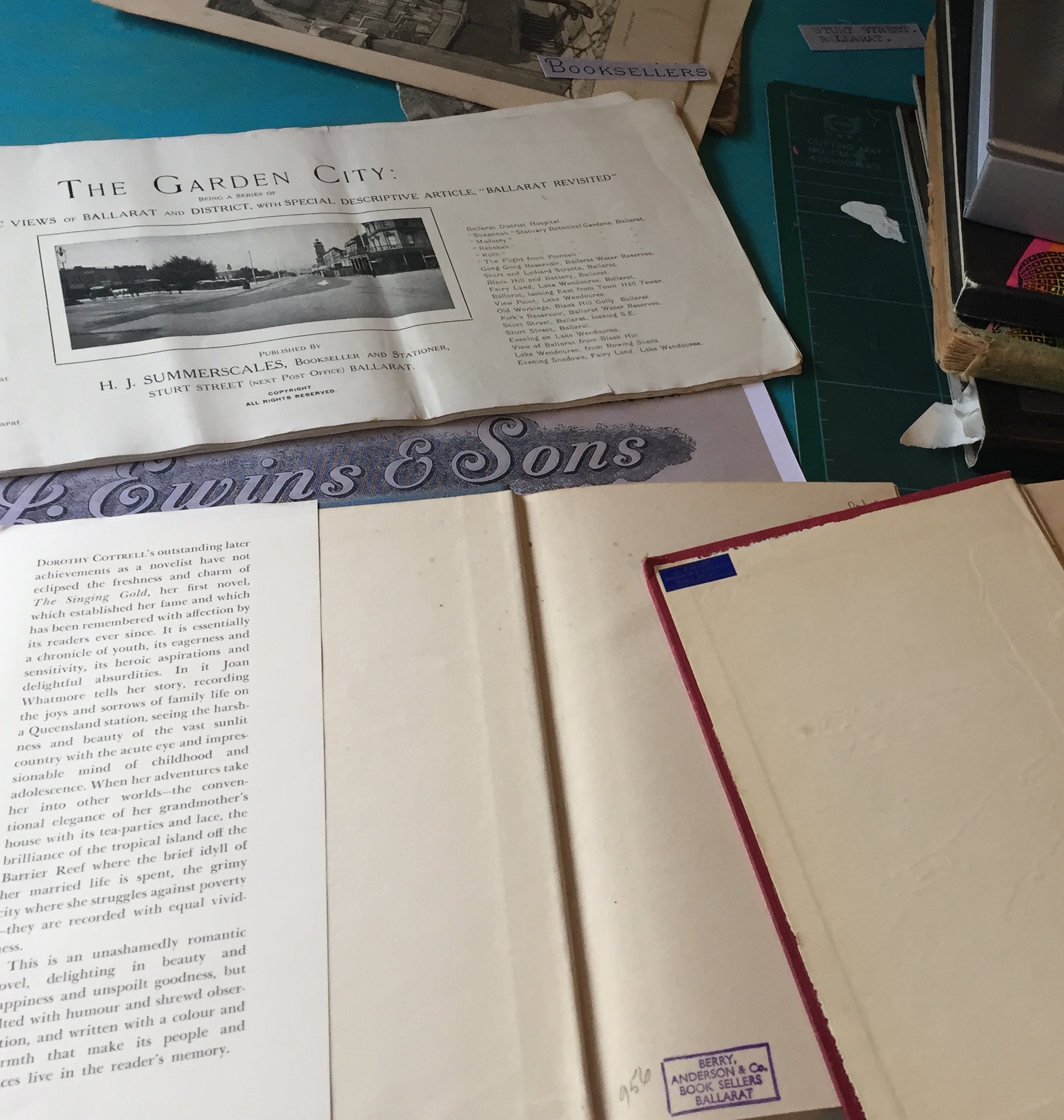
Episode One Part 2– Inspired by the booksellers labels (also known as ‘tickets’) found in second-hand books, explores Ewins Books of Ballarat with Rex Hardware, indie book feature with Christine Crawshaw at Sothis Books & Sartorial, and the creative segment ‘Things Found in Books’ with Erin McCuskey. Scroll down for transcript.
Click the image below to listen and for more info-
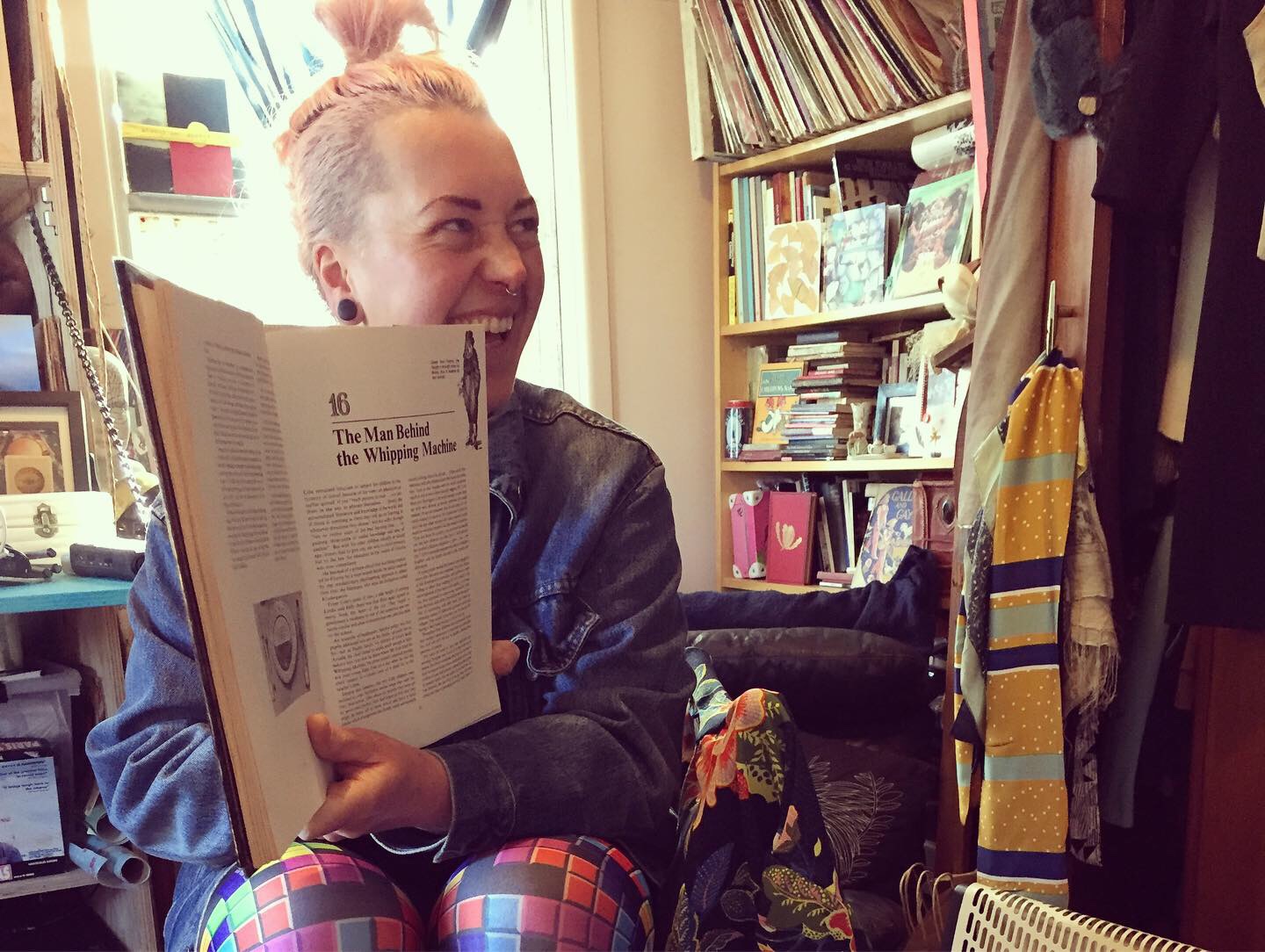
Episode One photos







Some more online reviews:
“Thought provoking literary reflections”
Thoroughly enjoying this podcast by Amy! Such well-researched & collated stories about some delightful literary characters & local personalities. Book lovers will adore this!
“Slow down and listen”
Beautiful stories, carefully told. Thank you Amy and the Minerva crew for giving us time to slow down and listen, think, reflect. Looking forward to more episodes!
And a story in the Ballarat Times with Edwina Williams
If you’re able to leave a review on Apple Podcasts or the like this helps us a lot and we’d love to hear your thoughts : )
You can also purchase the collage that goes with each episode to support production of the show, or give a one-off or recurring donation here.
And get in touch if you’d like to partner in some other way : )
But most of all- ENJOY! The next episode’s theme will be Travel and asks how when we can’t do this as easily physically- how do we travel with books and music? Special guest musician and sound artist Belle Chen, indie bookseller feature with Crave Books in Tasmania, and Things Found in Books creative response by Sophie Livitsanis. Stay tuned ; )
FULL EPISODE TRANSCRIPT BELOW (read of download) – PART 1 FOLLOWED BY PART 2
Booksellers & Storytellers Part One: E.W. Cole and Coles Book Arcade
[A delightful sound of choir leading into plucked guitar and different voices introducing the show, with guitar continuing underneath]
Woman’s voice: Ah everyone, you are listening to Gather
Child’s voice: You’re listening to Gather
Woman’s voice with dog bark in background: To Gather
Woman’s voice with American accent: Gather
[Same guitar doing a sweet little riff with the faint sound of pencil scribbling beneath. Sound of guitar continues beneath the host’s introduction]
Amy Tsilemanis (Gather host, smooth and calming): This is Amy Tsilemanis and this is Gather, with Minerva’s Books and Ideas, where we’ll explore the lives of books and the ideas they ignite and illuminate.
(Sounds of symphonion, plays beneath the voice of the narrator.)
Woman’s voice (host Amy Tsilemanis): Hello and welcome to the very first episode of Gather. I’m Amy, your humble gatherer and I’m coming at you from beautiful Wadawurrung Country in Ballarat, Australia. This episode is in two parts and will take you through the wonderful world of booksellers and storytellers.
If you were to walk into the Naarm or Melbourne Museum, you might go past the dinosaurs, the forest and marine life, the children’s museum, the First People’s Bunjilaka Cultural centre, past Phar Lap, an 80 year old champion racehorse that remains their most popular exhibit, and then the Marvellous Melbourne display. Past stories of gold, trams, technology and city life you would find yourself beneath a rainbow and maybe hearing the sounds of this symphonion. You see a mechanical box inviting you to READ, a series of small tokens promoting the ‘federation of the world’ stating that ‘all men are brothers’ and that ‘the happiness of mankind and the real salvation of the world must come about through every person in existence being taught to read and induced to think.’ (man and mankind standing in for us all, as was the way!). You might also see some copies of a rainbow covered book called Cole’s Funny Picture Book, and in it, the words to the Book Arcade song, and the mark of a master marketer.
Women singing acapella: The book you wish, the book you want, is almost sure to be found somewhere in the book arcade, if you will call and see.
Amy: In part one of this episode we’ll explore the wonderful world of bookseller and storyteller E.W. Cole, a man both ahead of his times, and of it, and his amazing Book Arcade, opened on Melbourne Cup Day in 1883. But we’ll also explore the books and creative works inspired by the arcade, its publications and its message of equality, literacy, and fun.
You’ll hear the voices of Lisa Lang, author of E.W Cole: Chasing the Rainbow and the novel Utopian Man, both published about ten years ago.
Woman’s voice (Lisa Lang): At that time there wasn’t a lot around on Cole. So now there is the display at the Museum and there’s also a display at the State Library. Neither of those were around when I very first started researching Coles’ story, so I was really quite surprised that there was so little recognition of his story. People knew the Funny Picture Books but they didn’t know much about the man behind it and the Book Arcade was very much forgotten.
Amy: Richard Broinowski, author of Under the Rainbow: The Life and Times of E.W. Cole, published this year.
Man’s voice (Richard Broinowski): He fired the imagination and the sense of humour of… of many Victorians.
Amy:… and Hilary Bell and Phillip Johnston, creators of the yet to be staged musical, Do Good And You Will Be Happy, based on the Funny Picture Book.
Woman’s voice (Hilary Bell): I really, really loved it and it was just kind of wild and the pictures were astounding and their kind of macabre, sentimental, beautiful, politically incorrect qualities these days.
Amy: These books will be our seeds, from which the stories unfold.
So while there is now a museum display, and multiple books and projects, I think part of the mythical magic comes from it only existing in these traces. As Mike Brady of Arcade Publishing puts it, (they put out the first non-fiction book with Lisa Lang in 2009) “As a youngster in Tasmania I was convinced that this was the grandest shop in the world and that one day I would visit it.” But as he notes, “unfortunately it closed not long after Cole’s death in 1918 and only remains in stories, and a section of glass ceiling over Howey Place off Little Collins St in the Melbourne CBD.”
What are all the different ways this story can be told and what does Cole mean to us today?
Woman’s voice (Lisa Lang): It always struck me that it was kind of a perfect story to be told in lots of different ways and it actually really surprised me that it wasn’t already out there because I know lots of stories in history don’t get told and often it’s the stories of women or aboriginal people or other minority groups. But Edward Cole was a white male and kind of an establishment figure, although fairly anti-authoritarian. Umm… so in some ways it’s more surprising that his story wasn’t sort of amongst the official history of Melbourne.
Amy: We’ll hear a bit more from Lisa later about her interesting experience of writing both fiction and non-fiction about Cole but who was he before the Book Arcade?
Richard’s book from this year was a response to the Cole Foundation doing a call out for someone to write the definitive biography of Edward. Whether or not this is possible is up for question but he adds some more context to Cole’s background.
Cole was born in Kent, England, before travelling to Australia via South Africa and travels on the Murray River, then the Victorian goldfields via Melbourne.
Richard’s book covers all this, through to mixing with the literary folk of Castlemaine, to losing his mining pal to dysentery and shifting his operations to a lemonade stall, and the beginnings of his entrepreneurial flair.
Man’s voice (Richard Broinowski): One could not say definitively this is whatCole was (or) how he was raised because you’ve got the skeleton, the bare bones of when he was born, where he lived…yes. But what did he do? What was he thinking? How did he get his education? And you have to look at several alte rnatives and say to the reader, these are the possibilities, you have to make up your own minds, it’s a bit of a mystery. Even more so was his year in South Africa before he went to Australia, when he was about 19 years old. He could have gone been in the military although I think that’s basically discounted. But he was involved… he could have worked for farmers, I think that’s more likely. He was involved to some extent in the Frontier Wars against the Xhosa and the Khoi, and I think that probably instilled in him a distaste, a repugnance for violence. Towards the end of his time in about 1850/51 he realised… news came through of the gold rush in Victoria, in Australia and he decided he should go there. He got on a ship and he went and then when he came there of course there was a lot of speculation about his life but what he did in the goldfields was pretty clear cut and they finally found their way to Castlemaine and when they got there they confronted a vast open plain of human activity like on a monumental scale. With ah… rifles going off and people singing.
Amy: While Cole wasn’t successful with gold mining he joined other canny people by providing needed services. He sold lemonade to the miners, before heading back to Melbourne and the opportunities of the population growth and culture there.
Richard: I think Australians were among… we had in the late nineteenth century… we had the highest standard of living in the world. It was in Victoria accelerated by the finding of gold. Victoria was very, very wealthy and Cole sort of became part of that and I think he realised that people needed… that there was a great cry and need for literature and he came across it really fortuitously because he was selling pies from a stall he had in the old Eastern Market, long since gone of course, on the corner of Exhibition and uh Bourke Street and uh he was selling his pies door to door in the inner suburbs of Collingwood, Fitzroy and East Melbourne. And a woman said to him ‘look I’ll buy your pies because I think they’re very good but I’ve got a whole bookshelf here of books why don’t you buy them and try to sell them instead. And so he took them and he set up a book selling stall in the Eastern Market and that set him on his progress towards developing what he arguably says, boastfully but probably truthfully, one of the largest book arcades in the world.
Amy: I love the image that you recall of someone going past his stall on horseback and Cole throwing his books up to him.
Richard: (laughs)Oh look it was a wild time, the Eastern Market was full of all sort of jousters and loungers and hooray Henrys and people testing their skills on electric machines.
The woman who allowed men to kiss her for a tuppence or a threepence. One bloke was so energised by the electric shock treatment he had before, he actually broke a jaw.
Amy: So can you describe the atmosphere of the bookshop? What would it have been like going in there? The sounds and sights in Coles Book Arcade.
Richard: There were two book stores before it, one further up Swanston Street. But another one was opened on Melbourne Cup Day, in 1883 and there he set the tone by turning it into a bit of a carnival. When you approached this enormous store, he had already knocked out the floors between the ceiling and the floor. It was like a modern ship, the interior of a modern tourist liner. You walk out of your cabin along a calestria, a gallery and downstairs you’ve got this enormous space where everything is sold. He had clear glass ceilings so that the sunlight would come in and flood the arcade. He had glass pillars outside, he had mechanical monkeys advertising what was for sale inside, mixed up with moral arguments about how if you work hard it’s virtuous and how you have to work to earn a good day’s pay and that keeps you honest and don’t drink and don’t smoke and all that stuff. And inside one of the things he developed I think and probably was a unique way of marketing, the shelves were open for people to browse, they don’t have to meet a stiff collared clerk who would get the books out for them, they could look for themselves, not only that but they could take the books out, sit down in a fern garden, in a quiet place within the arcade and read to their hearts content without having to buy. So he had a sort of a counter intuitive feeling about this, if we don’t force them to buy, they’re going to buy more and so they did. He extended the arcade with a very high quality tea salon, with bric-a-brac stores which had very wonderful china and ornaments that he would bring back from abroad. Understanding that at the time, the Melbourne standard of living, this was before the Great Depression of the 1890’s, the Melbourne standard of living was improving and women were working more and because the women were the homemakers, they were the ones who would come in and buy these attractive ornaments that he had on the third floor of his store so the sunlight would catch them and make them gleam and glisten and make them more attractive to the buyers. And he had a monkey house as you know, where kids were fascinated and coming to the monkey houses with their nanny or their mothers, who were appalled at watching these children with grave concentration watch monkeys copulate. ‘Oh mommy, what’s he doing there.’ They actually started a moral campaign against Coles’ monkeys and the Melbourne City Council eventually banned them. He had an aviary, he had birds in it, he had one bird that swore mightily at people, but they didn’t mind that, it was all part of the carnival atmosphere. He had an orchestra. He wasn’t particularly ah… refined in his taste in music, so he had light classics and hymns intermixed with hymns and his orchestra with a pianist played this music for the people. It was all very fascinating, people went there, not just to buy books but to rest. The Melbourne City Council had banned people resting on park benches and benches along the city streets. They actually put spikes on the sills of shops and windows so the people couldn’t sit down. But Coles very cannily had benches in the fern garden. He bought the furniture in the Dandenongs and he set them up so people could come in and read. It was all together very successful.
Amy: What a feast for creativity and imagination, both then and now. Here’s Lisa Lang reading from her novel Utopian Man.
[Piano music plays underneath Lisa’s voice initially and then fades out]
Woman’s voice (Lisa Lang): Edward stands on Little Collins waiting for the delivery cart. It is a dirty street backing onto factories and Edward hears the clank and thud of nearby industry. A breeze blows, through acrid and chemical, whipping up rubbish. It is the kind of street so devoid of life, even the rats ignore it. As he reaches for his fob watch the sound of hooves break into his awareness. The horses come into view, the heads lowered, behind them at more than twice their height are the tree ferns, wavering fragile intensely green. Gliding past the factories, the dream of the forest in the city’s heart. Edward is spellbound, as though some other agency has planned all this, he watches the horses, stout and spotted and rough of coat but with the dignity of thoroughbreds. He watches the ferns, a trembling mirage, barely credible in the grey landscape. Apart from the drivers he is alone on the street. The whole event coloured by the rare singular quality of his boyhood adventures.
“You Mr Cole?” calls one of the drivers. Skinny and freckled he looks no older than fourteen. Beside him the second driver appears a little meatier. Still Edward wonders how they will manage to shift their large and awkward cargo. They jump from the cart and Edward points them to the walkway where the ferns are to be placed. The boys move swiftly. They carry the plants between them, grunting, cursing but careful not to damage the tender fronds. When they are finished Edward tips them generously thinking all the while of his own two boys.
“Thanks mister, have yourself a champion day,” calls the freckled one, climbing up into the cart.
Edward basks in this rough blessing. You’ll have a champion day.
[Music rises up under Lisa’s voice]
Lisa: So I had actually started researching and writing the novel first and I was friends with Dale and Mike from Arcade Publishing and I was talking to them about Edward Cole’s story and they kept saying this would make a great little non-fiction book. Are you sure you wouldn’t be interested in writing some non-fiction. So I actually put I think the first draft of the novel aside and wrote the non-fiction and it was such a different process. The research side of it was similar but I guess what I was trying to do with the novel was really capture the human side,
the sort of quieter moments as well as the colour and excitement of 1880’s Melbourne. And you have such great flexibility in fiction to kind of make things big and colourful, make things small and intimate and quiet and you can kind of imagine the textures and the smells and the colours. In a way that if you don’t have the research material you can’t make up those moments. And so for me it sort of clarified what I was wanting to do with the fiction. The story itself is so interesting it doesn’t need any embellishment or colour but I guess I wanted to really bring that time in Melbourne into kind of full colour life. And at the same time show Cole as being human, flawed with good and bad qualities and not just sort of turn him into this exceptional, historical figure that nobody could relate to as a human being.
Amy: I was interested to hear how Lisa used the archives in her work.
Lisa Lang: The State Library has got some… a couple of boxes in the manuscripts collection that belong to Edward Cole and that’s actually got… some really interesting bits and pieces in there. Little sort of diaries and notebooks that he kept, letters that he wrote to Eliza and the children when he was overseas. I found things like the ticket stub to the Turkish Baths in the Royal Arcade. Yeah, little bits of ephemera and yeah just the smallest things could be really evocative. So, in a letter to Eliza there would be a little section put aside for the children with a few little diagrams that he had drawn and you could just feel through those little gestures a real sort of tenderness and involvement towards his children and it struck me as a bit unusual for a patriarch in the Victoria era, so little things like that were little clues or insights into the type of person that he might have been. And they help you sort of colour certain scenes in the novel where he’s interacting with the children, the importance of the children in his life. Yeah I guess you just pick up those little bits from the archive and you sort of transform them into a human personality.
Amy: Beautiful. So you were sitting in the library holding things that he’d actually created.
Lisa: Yeah, yeah, absolutely. It does really sort of spark the imagination. There is something special about seeing something in someone’s own handwriting and you know holding… even business documents that he had written. You just get a sense of the person… sort of just behind those documents and I guess it’s that little space that allows the writers imagination to create something and build something in that gap. Which you can’t always do with non-fiction. I guess with the fiction I felt… I didn’t mind making things up but I wanted to remain true to that feeling that those archival materials was giving me. So if I was getting a certain impression I would make things up if it helped to recreate that impression rather than just invent things purely out of thin air.
Amy: How would you describe umm… yeah that spirit (laughs) of what you found of him coming through as you were researching.
Lisa: That’s a good question. He’s pretty unusual in some ways in that he was such a good businessman, really entrepreneurial, really understood what was popular and what was going to strike a chord with a large group of people. And at the same time he didn’t care about personal popularity or being seen to be going against the grain or ruffling a few feathers and politically he was happy to stand up against things that were popular at the time. Like the White Australia Policy and argue against them. And so he was an interesting mix of someone who knows what the public wants but won’t necessarily always give it to them if it clashes with his principles or ideals. And so, yeah I found that aspect interesting. It didn’t stop him making money, he made quite a lot of money in his day. But at the same time he took a few positions that were unpopular and that could have potentially cost him business.
Amy: So yeah, the context that the book arcade was operating in that era of Australian life and Melbourne culture, what was that like being immersed in that world?
Lisa: It was really fun. I guess prior to really doing that research I thought of history as being a little bit conservative and you know the present and the future was all about the progress and the past was a bit dusty and sepia coloured and when I started doing the research I realised that that conception is quite inaccurate and history goes through cycles and you know the 1880s was actually a time of incredible excitement, change, rapid change in Melbourne, extreme colour and movement and new ideas and booming population, lots of immigration and just you know quite a sort of golden period literally in Melbourne’s life. And then you know things really changed after the 1890’s depression and then it was the start of Federation and you know things changed again so I guess I learnt to look at history a little bit more differently and you to realize that people in those times experienced what we think of history as richly and intensely as we experience our lives. That everything was fresh and new for them at the time that they experienced everything and this sort of dusty sort of embalmed notion of history.
I guess wanting to get beyond that to the sort of richly imagined human understanding of history.
Amy: You’ve talked about it a bit and I guess touched on it there, what do you think, yeah, literature or fiction can do yeah in bringing these things to life?
Lisa: I think when we do write about history we’re always doing it through the lens of the present so it’s always just another way to examine what’s going on now. But at the same time we can draw parallels and we can sort of re-examine the past in light of what we know. What fiction can do is give us a bit more of a personal involvement a bit more something more like a personal exchange with history. Something that kind of really resonates and makes a deep impression on people rather than reading a series of facts or events or you know things that took place.
[Piano music fades up and Amy’s voice runs over it.]
Amy: One of the things that jumped out for these storytellers was Cole’s inventive and unorthodox advertising that also extended to finding a wife…
Lisa: Look I’ve always loved Edward advertising for a wife in the newspaper. I think that one’s pretty hard to beat, you couldn’t make it up. It’s just one of those examples where he really doesn’t care what anybody thinks of him. It draws so much attention to him and his personal life to be advertising for a wife on the front page of the paper. At a time in a long before the classifieds, long before Tinder, long before any of these modern ways we had of trying to meet a partner and it’s just that mix of his real pragmatism and practicality and sort of knowing what he wants and his sort of disregard for convention.
Man’s voice (Richard Broinowski): Cole was not a chauvinist in the sense of the day. He realised women were of consequence. But yet there was that conditioning that they’re not as good as men. And he’d be thrown out of court now.. And he would feel really hurt about that because he was actually a man who had equanimity and who had a sense of justice about people. I think in his heart of hearts he said no, women were the same as men but when he advertised for a wife she had to be moderately well educated, she had to be cleanly in her habits, she had to be a good cook. All the stereotypes of women being barefoot and pregnant in the kitchen were there at that time. In fact he did marry a Taswegian and she proved to be very strong minded and had a wonderful strong character. She was so tough on his staff when he was hiring… at the height of his arcade when he was hiring over a hundred employees at a time, when he went on buying trips to England his wife took over and she sacked a few people who Cole in his soft hearted way couldn’t bear to fire but she did when he came back all of them breathed a sigh of relief that the master was back.
[Piano music rises in volume beneath woman’s voice]
Amy narration: Cole was a fascinating character who wove his own story, and we now hear about some of the qualities that sat behind the inspiration to turn his Coles Funny Picture Book into a musical, and another kind of storytelling.
Woman’s voice (Lisa Lang): You know I think he was certainly a utopian and he had an incredible faith in humankind. The fact that he, you know, yes of course he was a sort of Victorian gentleman who was a product of his times. But he had an incredible sense of progress and of what human beings were capable of.
For example he was one of the few vocal opponents of the White Australia policy in the 19th century where even, you know, the Labor party back then was very pro White Australia policy it was a threat to what they saw as Australian worker’s jobs. Cole took a stand, he put ads in the paper, he made it a very sort of central part of what his book shop was promulgating. So he went to Japan and interviewed the Japanese on their world views and brought them back to show white Australians how civilised they were.
So that was kind of not only extraordinary to be able to see above what was the sea that you were swimming in back then. But also to brave enough to come out and say it.
He had very kind of progressive views on gender and on education and on the way children should be brought up.
He was certainly a believer in hard work and that he had a huge amount of tenderness and compassion. He loved animals.
These are some of the things that I think really struck me.
Man’s voice (Philip Johnston): While we did not try to do a biopic into the musical we did bring many of the elements of Cole’s life but rather than doing them in a narrative biographical way they’re just elements of the fantasia on Cole.
So the book shop, including some of the aspects of it that were so fantastical.
Woman’s voice (Hilary Bell): Hello my name is Hilary Bell and I am primarily a playwright but I also write for the screen and I do a lot of work with music theatre. So I write opera libretti and I write book and lyrics for musicals.
And in the last 5 to 10 years I’ve also started working on picture books.
I’ve worked with an illustrator called Antonio Pizonti and Matthew Martin, another illustrator and we have a number of books out including one called Alphabetical Sydney.
Man’s voice (Phillip Johnston): And I’m Phillip Johnston, I’m a composer and musician. I’m a jazz musician. I play the saxophone and I also write music for films and silent films and in the case we’re talking about here, theatre.
Woman’s voice (Hilary Bell): So I’m a child of the 70s and that was when this book called Funny Picture Book had a sort of a revival. It had never actually gone out of print since it first appeared in 1879 but by the 80s it was kind of, you know, no longer appearing on bookshelves. But my parents introduced it to me when I was very small and it was sort of a fixture. I read it all the time. I skipped over the boring, you know, the oneness of man and those sort of philosophical tracts back then. And I just went to the whipping machine (laughing) and the man turning into a screw and cats dressed up in pinafores. I was with Phillip, so we’re a married couple and we met in New York, got married over there, lived there for a long time and we were back in Australia in a second hand book shop one visit and I found a book on the shelf I think and showed it to Phillip and told him about my connection with it and he said ‘wow, this would make an amazing musical.’ And so that would’ve been probably more than 10 years ago.
Phillip: Closer to 20 years now.
Hilary: Probably 20 so yes we started kind of going, how do you turn a book with no story and no main characters into a musical and that was the beginning of a very long dramaturgical experiment that’s gone in many, many different directions. Musically I’ll let Phillip talk about that, but we were very kind of keen to find a way that we were paying tribute to the music of the style of the book. So kind of Music Hall is what we were interested in and then Phillips own inimitable jazz style.
[jazz music starts playing]
Phillip: Well I think one important thing to mention is that the show that we worked on was always meant to be a biography of the book more than a biography of Cole. So a lot of the artistic directions that we went in were aimed at evoking the book so that’s one of the reasons why we looked to English Music Hall and Vaudeville and the music isn’t really pastiche per se. Some of it verges on pastiche I would say but it’s modern music which references older musical styles but it’s not faithful naturalistic interpretation of the music of that time it’s more of a fantasia on older styles of music which we both happen to love anyway and kind of penetrates a lot of what we do.
[piano music starts]
Woman singing:
Come out you creatures where ever you are.
Put down your soup spoons, put out your cigar.
From comic and ??? the quip and the pun.
Come out of the shadows, there’s work to be done.
Man singing:
You all seem bewildered.
You’re asking what for?
We’re making a book to prevent a world war.
Hilary: Lots of different theatres companies have been involved in it and every time we’ve kind of struggled with how do you tell? How do you impose a story on something that doesn’t… essentially doesn’t have a story and as Phillip said we weren’t really interested in doing a biopic of E.W. Cole, although he did have an extraordinary life. What we were really excited about was the book itself. And you go through all these different lands in the book, so Baby Land, Santa Claus Land, Smoking Land. It’s this kind of amazing picaresque journey really and I think we’ve kind of come full circle now. We tried imposing a list of rules of dramaturgy onto the material but ultimately where we are at with it right now is letting it be a kind of a variety concert. So rather than try to force the square peg into a round hole, just celebrating the messiness and the kind of unique loopy world view that was E.W. Cole’s and letting that kind of shine rather than trying to trim the edges and making it into a well made musical.
[accordion music plays]
Hilary: We had wild ambitions. We actually had in the stage directions the Coles Funny Picture Book kind of being constructed on stage and we were very inspired by oh the kind of parlour games and board games and artwork of the time. So you know, pop up books and musical postcards and even cigar boxes that turned into little stages. So we had a very lavish vision to begin with.
Phillip: An English theatre company that did a show called Shock Headed Peter. It was kind of a touchstone for us and our vision of how it could look. Was very homemade and very sort of fantastically dark. We imagined in our wildest dreams, constructing the spanking machine, the whipping machine rather, and some of the fantastic machines from the book and also including the element, one of the most widely distributed throughout is these very Victorian looking anthropomorphized animals. The stork and the cats and dogs wearing evening clothes and frogs and toads as characters. A nap is also a big part of the show.
[piano music and singing begins]
Man singing:
It must be the funniest ever produced.
Man and woman singing together:
What will you call it? What’s it about?
Man singing:
Welllllllll…If you want people to read and to think.
You must use the very best paper and ink.
The spine must be sturdy.
The type not too big.
And see you devote a whole page to the….
Man singing:
…stork is by far the most dignified bird.
Give him a whole chapter, give him the last…
Man singing:
What the children want is a doggie who…
Man singing:
Stop you’re all making a terrible din.
Woman singing:
Next one who quarrels…
[music and singing fades out]
Phillip: We wanted to refer to a lot of older styles of music but twisting them a little bit. The same way that we were in the story.
Hilary: Spiking, rubbing up against, the sort of… almost sentimental mawkishness of that kind of Victorian view of children or mothers or babies or animals. And then the kind of glee that you can see in pages like the whipping machine. Or the sort of stuff Phillip was just describing in Straw Peter. There was something quite sort of uncomfortable in the marriage of those two perspectives.
Amy: What do you think music and song and theatre would have brought to telling the Cole’s story?
Phillip: Another of the projects I worked on recently was a collaboration with Art Spiegelman, the graphic artist. And we presented a piece called Wordless at the Sydney Opera House. Which also brought graphic images and books from the last hundred to a hundred and fifty years to life. And it just, you know, provided insight to people who had never heard of these things, to that work and made a new thing out of it. And we performed live music with these projections of images. We could potentially do the same thing with Cole’s Funny Picture Book. People love it, they get great pleasure out of it.
Hilary Bell: I would also say there’s something about the book that’s just begging to be made into something three dimensional. It’s mostly in black and white if you look at the book itself and it’s just bursting at the seams to be filled with personality, filled with colour. To pop off the page with the aid of music and magic, visual slight of hand. So it just kind of helps pop the whole thing into a whole other dimension. That’s what’s exciting to me about it. And to appeal to an audience on an emotional level in a way that you know, it certainly does to some degree but to be able to take one character or one of the ‘lands’ in the book or one little piece of verse and dig deeper with that and turn it into a whole package. A living, breathing musical package.
[Piano music and choral singing]
Hilary: I think what kids love is stuff that is a bit dark. That’s what I loved about the book as a child myself. With this show though I think that it’s got some dark and profound scenes. So whatever the kids get out of it may not be the same as what the adults get out of it.
Amy narration: Bell and Johnston’s work really brings out the complexity of Cole’s world, that wasn’t all rainbows and lollypops, and through these different ways of exploring the story there’s a richness of character and spirit that resonates today.
Who was Edward really and what does it mean for us? The reality is he was many things… both shy, and bold. Of his time, and ahead of it. Magical, and human. He had hope and the will, to build a better world, a more equal, more loving, more weird, and funny world, and we can all learn something from that.
Man’s voice (Richard Broinowski): He was a futurist, he was fond of and used, embraced modern technology, electric light and the telephone. He had an electric pneumatic lift. One of the first elevators in Melbourne. To take people up to the third floor. He had an energetic sense of the absurd. He was good at self-promotion. He encouraged reading, literature and Melbourne literacy. And that’s a good thing about this book. Which the Foundation, the Cole Foundation is going to give every high school in Victoria, about three thousand of them, a free copy of my book. I hope that that stimulates kids to think about their past. If we don’t then we are bound to repeat it.
As part of Richard’s book, Under The Rainbow, coming out this year, there was also going to be memorial created at the remaining bit of the arcade in Melbourne city but the pandemic had other plans, look out for it next year. Maybe we can draw chalk rainbows on the ground together?
For now, thanks so much for listening, in the words of Lisa Lang’s freckly delivery boy, have yourselves a champion day, and after the credits, enjoy our recording of the Coles Book Arcade song, in its entirety.
[Coles Book Arcade song sung by Sharon Turley with piano music by Ellen Sorensen]
Amy narration: Gather, with Minerva’s Books & Ideas, is produced by me, Amy Tsilemanis with sound engineering and general audio mastery by the amazing Dave Byrne and this first episode is proudly supported by The Australian Government’s Regional Arts Fund, provided through Regional Arts
Australia and administered in Victoria by Regional Arts Victoria. Thank you.
Produced on Wadarrung Country in Ballarat, Australia. We pay our deep respects to Elders past, present and emerging as we live and work on this ancient and inspiring land.
Music by Ellen Sorensen has been specially created for the show and the Coles Book Arcade song is sung by Sharon Turley
Songs from the musical Do Good And You’ll Be Happy are courtesy of Hilary Bell and Phillip Johnston. And the Coles Arcade symphonium is with thanks to the Melbourne Museum.
Logo and episode design is by Tiffany Titshall.
Books we’ve discussed are Under the Rainbow: The Life and Times of E.W. Cole by Richard Broinowski, published through Melbourne University Press.
Utopian Man by Lisa Lang published through Allen & Unwin.
E.W. Cole Chasing the Rainbow by Lisa Lang from Arcade Publishing. And you can also get a copy of the 2013 Coles Funny Picture Book. A ‘best of’ that Mike Brady worked on with Hardie Grant Publishing, which is described as a curated collection from the infamous and much-loved Cole’s Funny Picture Book first published in 1879.
Thanks so much for listening and we look forward to bringing you more. We are committed to high quality and diverse storytelling and creativity but can only do this with your support. Check out minervasbooks.com/gather for more, including how you can pick up my collage for this episode. With love and bookishness, see you in Part 2 of Booksellers and Storytellers soon. Adios.
[Coles Book Arcade song plays out]
Episode 1: Part 2 TRANSCRIPTION
Booksellers & Storytellers Part Two
[A delightful sound of choir leading into plucked guitar and different voices introducing the show, with guitar continuing underneath]
Woman’s voice: Ah everyone, you are listening to Gather
Child’s voice: You’re listening to Gather
Woman’s voice with dog bark in background: To Gather
Woman’s voice with American accent: Gather
[Same guitar doing a sweet little riff with the faint sound of pencil scribbling beneath. Sound of guitar continues beneath the host’s introduction]
Amy Tsilemanis (Gather host, smooth and calming): This is Amy Tsilemanis and this is my new podcast Gather, with Minerva’s Books and Ideas, where we’ll explore the lives of books and the ideas they ignite and illuminate.
Amy: Hello and welcome to Part 2 of our first episode Booksellers & Storytellers.
(Harp music plays)
Among many of my aspirations, I would like to become a writer. Therefore, I would feel very privileged to attain some part time work, surrounded by beloved books.
I find bookshops very special, even enchanting at times, and believe that books are sacred and deserving of respect.
I have not had a lot of experience in the workforce, but I hope you will consider my application for any work I could assist you with in the wonderful realm of words.
(record scratch sound)
What a tripper.
Well my friends, that was a letter that I wrote when I was sixteen and sent to bookshops around Melbourne. I was told to stay in school, but I can report that in my 20’s I found myself working at the fabulous Readings in Melbourne, the iconic indie bookshop led by Mark Rubbo, I even had a few things published, so I checked in with a lovely old colleague Chris Gordon about how they were going in lockdown there and I also asked how she thought Cole would have responded to Covid…
Woman’s voice (Chris Gordon): Oh I think he would’ve done exactly the same thing, don’t you? I think he’s in some ways another sort of Mark Rubbo in a way. He would have been… I mean not politically bent in that way but certainly in passion for the written word and for the community I think he definitely would’ve been on some bike with a flag at the back and you know (laughing) knocking on people’s doors. We’ve had lots of staff doing that during this time. I mean I don’t know what it would feel like to have, you know the owner of Readings knocking on your door on a Saturday night but I imagine pretty good actually. Mark has said that he’s been offered wine and tapas. He’s been given marmalade by customers to take home. (laughs)
Amy narration: Book people are the best people.
In Part 1 of this episode we travelled to the Victorian Goldfields and to Marvellous Melbourne in the nineteenth century. Our book seeds were Cole’s Funny Picture Book and works inspired by Cole and his life.
In Part 2 we look to 20th and 21st century booksellers in Ballarat and hear from Ballarat’s resident music archivist Rex Hardware. What we’re hearing now is the last live gig he recorded at the Ballaarat Mechanic’s Institute this February. The Carlo Onzi Trio.
(The Carlo Onzi Trio play below Amy’s voice)
We’ll also have the first of our regular indie book people features and this will be a special one with Ballarat’s newest bookseller Christine Crawshaw who has created a new bookish wonderland in the old Minerva space after we moved online. Christine is a costumier making costumes for musicians like Adam Simmons and a lover of the recycled and reimagined.
We’ll also enjoy our very first creative piece for the segment Things Found in Books from Ballarat storyteller extraordinaire Erin McCuskey, creator of the transmedia project Luxville and her fabulous Luxville tales.
Our book seeds here are somewhat tangential but are the little teeny stickers of sorts that you might find in the inner front cover of an old book. I’ve seen ones with wonderful fonts and imagery, and they always add something extra for me, part of the journey the book has been on, and a hint at the bookseller’s hands it’s passed through.
Benjamin L Clark aka The Exile Biblophile gathers bookbinders, perhaps more associated with tickets and booksellers with labels, together under the term ‘book trade labels.’ He is working on a field guide to these delicious bookish ephemera, and also points towards a site called Bibiophemera if you want to check this out.
Clark states that “Book trade labels were used by booksellers and bookbinders and can be a wealth of history and fun. Labels, historically, were available from commercial label printers. However, some specially made labels could set a bookseller apart from others nearby.”
We love the books that have come to us at Minerva’s books with such local markings, conjuring bookshops and publishers of the past. Ballarat one’s include the names Berry Anderson, Summerscales, Bills Book Bar, and Ewins.
Woman’s voice:
Where have you been all the day?
My boy Tommy.
What kept you so long away?
My Boy Tommy.
To stay so long I did not mean.
But Mother, I’ve to Ewin’s been.
And there’s a lot of things I’ve seen.
That’s what delayed your Tommy.
There were Oh! Such pianos and organs displayed.
Fancy goods, toys and artware, the best in the trade.
Of choice stationary there was tons on hand.
And all the new music that one could demand.
While for standard or new books, relating the doings.
Of the great and the good, there’s a grand stock at Ewins.
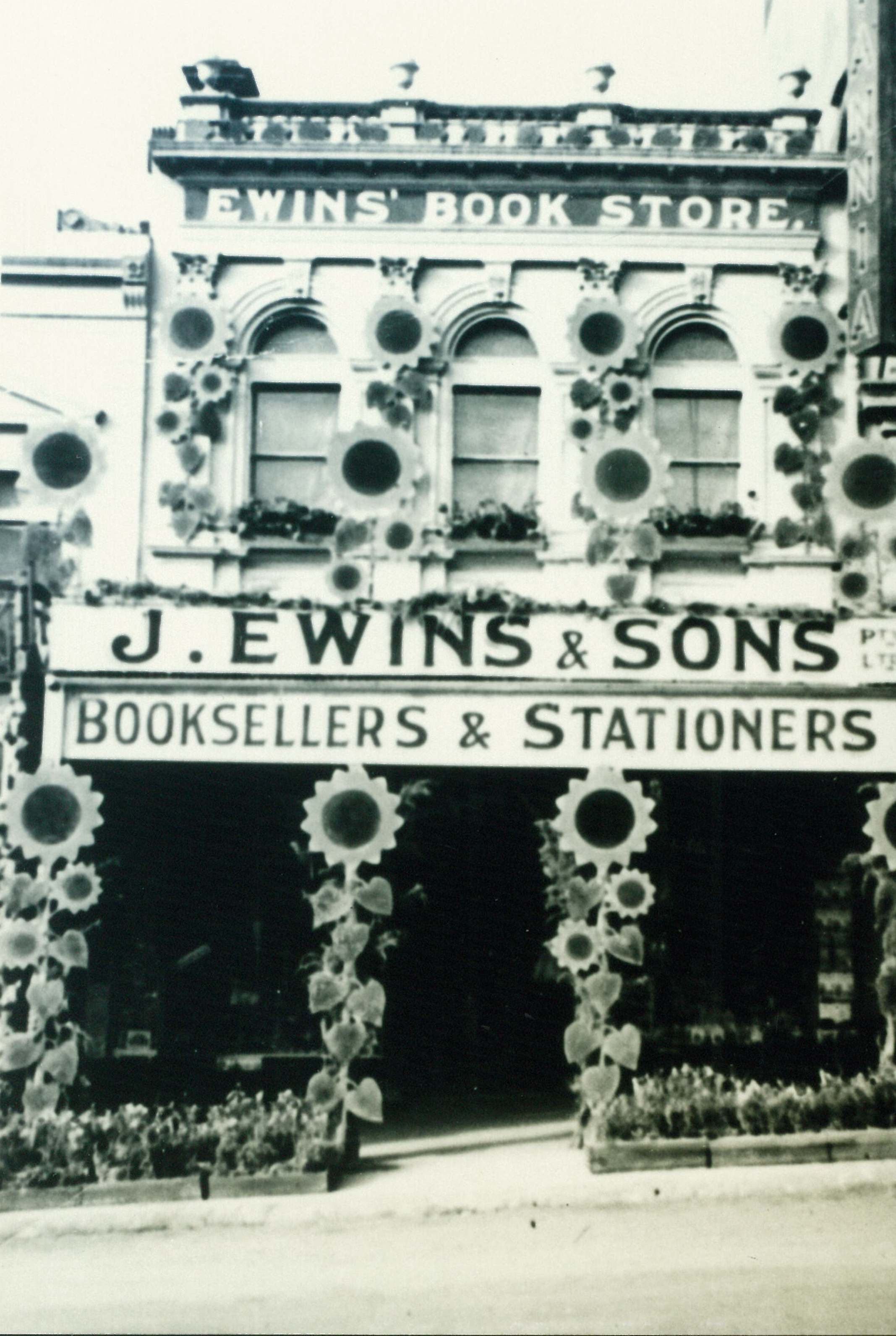
Amy narration: Ewin’s was a bookshop that lived on Sturt Street. Just a few shops down from where we were, on the other side of the Mechanics’ Institute. There are photos in the institutes collection of this part of the street decorated for the 1938 floral festival, and the bookshop covered in, what I imagine, were sunflowers. For a past heritage project I worked on I got to go down in the basement of what used to be Ewins, now it’s a bike shop, and was given a little souvenir, an old bottle of Penguin Drawing ink. And imagine my delight when I learnt a friend Rex had worked there as a teenager, in its days before it became an Angus & Robinson. We’ll chat to Rex here, you’ll also hear his 55 year old cockatoo Jacko!
Amy: Cockatoo, it’s a cockatoo?
Man’s voice (Rex Hardware): Cockatoo. Sulphur crested. Amy: (Amy makes cockatoo sounds) So the cockatoo thinks Rex is his long lost cockatoo compadre Richard. So apparently it calls to him. Oh he’s looking at me through the window.
Rex: Isn’t it great that window. The way he can look in at us.
Amy: He’s got the big side eye happening. How does he call for you?
Rex: (shouts) RICHARD! He says Richard.
(light jazz music plays beneath)
Rex: I’m Rex Hardware and I am an archivist and a music producer here in Ballarat. And part of my passion is dealing with archived audio recordings. So I’ve spent most of my adult life recording music and you know documenting the music scene, taking photos, producing videos, teaching young people how to do audio and video and promotion and that kind of thing. I worked at Ewins, 111 Sturt Street, Ballarat from 1983 to 1989. I reckon I went in there as a Year 9 student saying I need to do some sort of work experience. I’d really like to work at a book shop, can I do it? So I did it… and it was a week and I had to… it was nine in the morning till five in the afternoon, all week. You got paid five dollars a day or something. And at the end of it when I was saying ‘thank you, goodbye’ for the last time, the manager came over and said ‘now, if you’re interested in a job here we want you part time.’ And I was like ‘oh my…’
I didn’t even have to apply for a job and I got this great job at the book shop. It was a two-storey affair, so there was the ground floor and there was the upper floor. The ground floor as you walked in had a counter on the left. Obviously, with you know the cash register. And as you walked in it was general non-fiction on the left, fiction on the right and at the rear of the ground floor there was a huge stationary section. Upstairs in the middle of the store you go up and there was a remainder or bargain books segment. Every corner you went around in Ewins you would find something from the 1940’s or 50’s or 60’s. Not necessarily from the 20’s or 30’s. That stuff was all gone but there was lots of stuff that remained from the 1950’s and 60’s. And even down in the stationary section I would look and there’d be stuff there that would be dating from the late 70’s, bits of stationary.
They ran a tight ship. Dusting, you know, and wiping was part of your job that you had to do. Whether you were on a Friday night or whether the full-time staff did it. And it was a fantastic place to work.
Amy: What was the kind of cultural life of Ballarat like?
Rex: Bookshops were still a thing. There were still a number of bookshops in Ballarat. They were really well stocked. Books were still a thing. And Ewins was still one of the preeminent retailers in Ballarat of books. People knew they could come in, order a book and it would come in. So there were a lot of the cheaper remainder book shops that were popping up in Ballarat in the mid 1980’s. But they had no capacity to order you a book. All they had was the remainder stock that they’d get from the warehouse. You know, whatever franchise they were, and they didn’t order books. So a really strong amount of the sales came from people, not only knowing we were well stocked but also being able to order books.
The big competitor, I just remembered, were Ballarat Books in Armstrong Street. So they had the stranglehold on text books and school books but for some reason I think there was a bit of a hangover then where you could order your school books from Ewins then we definitely had some people who would come in and do that.
The great thing about the management around that time was they made sure that the young staff, even if they didn’t read these books, were aware of what was popular and what we were going to get asked for and where it was in the store. Or the fact that, you know, the latest Bryce Courtney book was out of print and it was gonna be three months before the printing press is good to go and they could have it back in.
We also had a very early computer-based terminal where you could type in, and I don’t know how that worked, I think there were large format floppy disks that was sent up with ISBN numbers that you could search for. It certainly wasn’t online because the internet was yet to be. But there was definitely a database that we could search. We also had the ability to ring one of about twelve publishers and inquire on the phone for a customer about the book that they wanted and its availability.
It was my job on a Saturday morning to deliver the books next door to the reading room at the Ballarat Mechanics Institute. And I would go in there… just with the box. Have a quick chat, have a look around. All the paint was peeling. It was a very strong smell of dampness and it was basically a crumbling ruin. There was also a really nice counter in the centre of the reading room that had a bit of a glass see through edge around it. And you would look through that glass and then you look through another big container and there was one of the original Withers History of Ballarat… I’ll always remember that. Ever since I’ve wanted a copy of Withers History of Ballarat.
I really love reading and I really love books and it was a book called the Paul Hanlen Children’s Encyclopedia that I’ve recently discovered from my mother’s collection. And I’d basically read every page of it by the time I was about 10 or 11 years old. It was a great source of science and technology and nature and space and there were a lot of those books that Ewin’s had on sale. So I remember going in before I worked there and buying on special, buying some of these books and begging my mother to buy them. So when I started working there… not only was it great that you were just in a book shop for three or four hours. You know, on a Friday and a Saturday night and you know, they paid you. But they gave staff 25% discount. So I found myself saving and spending a lot of my wages on their books.
The other place obviously I went to was Brash-Suttons. Brashes in the Bridge Street Mall. Buying a lot of cassettes and buying a lot of vinyl. But a lot of my income was taken up with buying the books that I sold. I was a reader and I was really interested and I think they saw that and that’s why they were keen to foster my knowledge and, you know, keep me working there.
So yeah… a great staff. I’m pretty sure there was only one other male. It was all female staff… no sorry… there was one assistant manager who worked in the office. He did mainly accounts and there was another young guy. But the whole time I worked there, there was probably nine or ten women who worked there so it’s very predominantly female staff.
Amy: Yeah, that’s interesting. You talked about it a bit with the Mechanic’s Institute, but what was that strip like on Sturt Street at the time.
Rex: There was Ewins, there was the Mechanic’s Institute. And once again, the Mechanic’s Institute had a library but it was very much for very old people and when they had their doors open the smell of the 1950’s or 1850s as the case may be, would emanate throughout Sturt Street. You’d then go up and there was a little tiny bakery but the jewel in the crown was the Mechanic’s Institute but one of the more exciting things about that little block, just underneath the Commonwealth Bank was Unicorn Lane and Unicorn Lane had a little café and another really groovy kind restaurant called Café Soirée. And it also had a clothing store called The Sacred Cow and my friend Anna worked there part time. And after school we could go there to the clothing shop that she was… just like me… she was working after school but we could go there and drink Moselle, after school and smoke cigarettes. So a really cute little block, right there between Angus and Robertson and the Commonwealth Bank. So I managed to be there for like two or three years when it was still Ewins and Angus and Robertson and I’ve got a couple of nice photos of the maroon store with yellow lettering.
So Josiah Ewins, born in England in 1841. He came out as a 20 year old and established in Ballarat his first book shop in 1861 and once again this is all hearing about the gold discoveries in Ballarat which is why he packed up a dray and put a whole lot of books in the back. In the early days Ewins was associated with the old Theatre Royal building in Sturt Street but business prospered and in 1889 he bought the premises of the Australian and European Bank at 111 Sturt Street.
The building was transformed into a modern and attractive book shop. Word spread throughout the Western District and throughout the country that Ewins was a particularly well-known book shop for its educational department and it built up very substantial sales in that field. ‘Liberal discount for cash’ it says on this old document.
Josiah Ewins had three sons during the 1870’s. Alfred, Herbert and Jim, who was known as Arthur for some reason. All of these three sons worked in the book shop. A well-known story of the time was that Josiah promised 100 pounds to the first son to marry and have a son. The three sons managed the business from about 1906 when their father went into semi-retirement.
(Rex’s voice fades out)
Amy: With Rex’s interest in archives he was given an old document with some of the history which he was reading from there. And there’s also some memories from employee Don, who started as a boy at Ewin’s in 1918 and worked there for 33 years. He notes that ‘when Mr Josiah Ewins and his wife plus two daughters died, I was coffin bearer. They lived opposite the St John of God hospital and the house was called Lyndon’. (note listeners that when I googled Lyndon House Ballarat I found a 2014 article about a man transporting drugs in an umbrella, ah Ballarat).
I was also excited to hear in these memories, that it was Don that was responsible for the sunflowers in the floral festival decorations, and that his weren’t made out of paper but of plywood. He says ‘other shops used crepe paper waxed flowers which faded but my wooden decorations lasted for years. He also says that he supervised the window and inside decorations for the festival with ‘dried bracken fern and red hot pokers made out of crepe paper and sky rocket sticks plus other flowers arranged in large drain pipes in the centre of display tables.’ Sounds pretty wonderful, shows how bookshops have always played a creative part in the city life and the civic pride.
The little tune we heard before about Ewins, the boy Tommy, hanging out in Ewins and finding all the fabulous stock, that was also from those documents that Rex had and comes from a book of verse called Ballarat Chimes published in 1909 by Georgina Tickner, who went by the pen name of Mona Marie. Who was she I wonder? Something to chase up later.
Rex: There wasn’t a uniform, I was just told to wear blue trousers and a white shirt or something. In 1983 and 1984. By the time Angus and Robertson had taken over in 1985 I had to wear these special blue slacks and a special shirt with markings on it and a tartan tie. So clearly it was the Robertson tartan and the little tiepin that you pinned to your shirt so it would stay in place, that said Angus and Robertson. I’ve still got that.
I’ve also got a reference.
“Rex Hardware has been employed in a casual basis for the store for three years”
This is what… 1987. I have a “very pleasing personality”. I am “courteous and well-mannered to customers and staff.” My duties involve “being in all areas of the shop, my duties included unpacking and pricing of stock, stock-taking, general sales and cash register work, display and cleaning of stock, invoicing and dispatch, counting money and night safe duties.”
She’d have no hesitation in “recommending me to any prospective employer and I’ve proven to be an excellent employee.”
There we go.
Amy narration: So soon we’ll move up Sturt Street, underneath the statue of Minerva, goddess of wisdom, and the grand Mechanic’s Institute doors to 121 Sturt St, which has seen its share of bookish action, even back in its early days as a fruit shop, next to the at times bustling institute library and cinema. Since 2000 it’s been a bookshop. Alex Zety’s Pot of Gold Books and Collectables, who I actually chatted to for a project back in 2013, so you’ll hear a bit from him, Minerva’s Books 2016-2020, and now the newest kid on the block, Sothis Books & Sartorial.
So before we hear from these Ballarat book folks, we’ll take a creative interlude into our segment Things Found in Books and Erin McCuskey’s story, which mixes fact and fiction as is her way…
(classical dreamy piano music plays under woman’s voice)
Woman’s voice (Erin McCuskey): For me stories float between hearts and float between minds and are carried on the air and through the earth, by feelings. So mixing fact and fiction for me enables me to tell stories that are partially true and partially untrue but together they create their own… their own truth, their own way of taking us forward as a people.
Hello I’m Erin McCuskey. I am the creative director of Yum Studio. My main emotional feeling outlet is filmmaking and I love to use overlays, use heritage and history and use fact and fiction to layer those images with real and imagined feelings.
Amy: So could you talk a bit about Luxville as an example of your beautiful storytelling? What is Luxville?
Erin: Luxville is the story of a large regional town, it’s based on Ballarat, it’s not Ballarat but some of the facts that I use throughout Luxville are from Ballarat. And some of the fictions are as well. (laughs) It’s actually enabled me to… For people to share with me, little stories that don’t fit anywhere else, they are not complete stories, they are… they feel like they’re… you know… a little heartbeat of a story. So where do all those little heartbeats and moments of stories go? I don’t know. So… and because I collect things like that, I wanted to be able to put them somewhere, so I put them into a story and Luxville is the tale of an artist’s revolution in this town and this town is a town that has forgotten who it is, has forgotten what hope is, has forgotten what joy is, has forgotten to challenge and to ask questions and has at the basis forgotten to be curious.
(classical dreamy piano music begins again)
Amy Tsilemanis: So during my time in the book shop over the last few years I’ve been collecting interesting things that I found in books and I showed this collection of things to Erin and she was drawn to some beautiful silk woven bookmarks.
Erin: I love fairy tales and like to, you know… write fairy tales into Luxville as well.
But finding that one and then reading the little homily that… it was all homilies about you know… I miss you, I long for you, can’t wait for us to meet again. And it made me think about the lives of books and that we give them so much because they give us so much but there’s some books you can part with and there are some which you can’t wait to get rid of and I think that’s just like people isn’t it?
So the bookmarks were a beautiful way of telling the book how much it was loved, but the book also telling the reader how much it was loved being read. So yeah… they immediately captured my attention.
Things Found in Books segment intro
Woman’s Voice speaking slowly [with a vintage sound playing beneath]: Things found in books
Old radio style male voice [archival audio, with jaunty music beneath]: You’ll hear a new intimacy and richness
[Jaunty music continues beneath] Man’s voice putting on Louis Armstrong singing voice: Things found in books
Music of Melanie Safka song, Look at my Song Ma: I wish I could find a good book to live in.
Music fades out
Voice of Erin McCuskey reading her story:
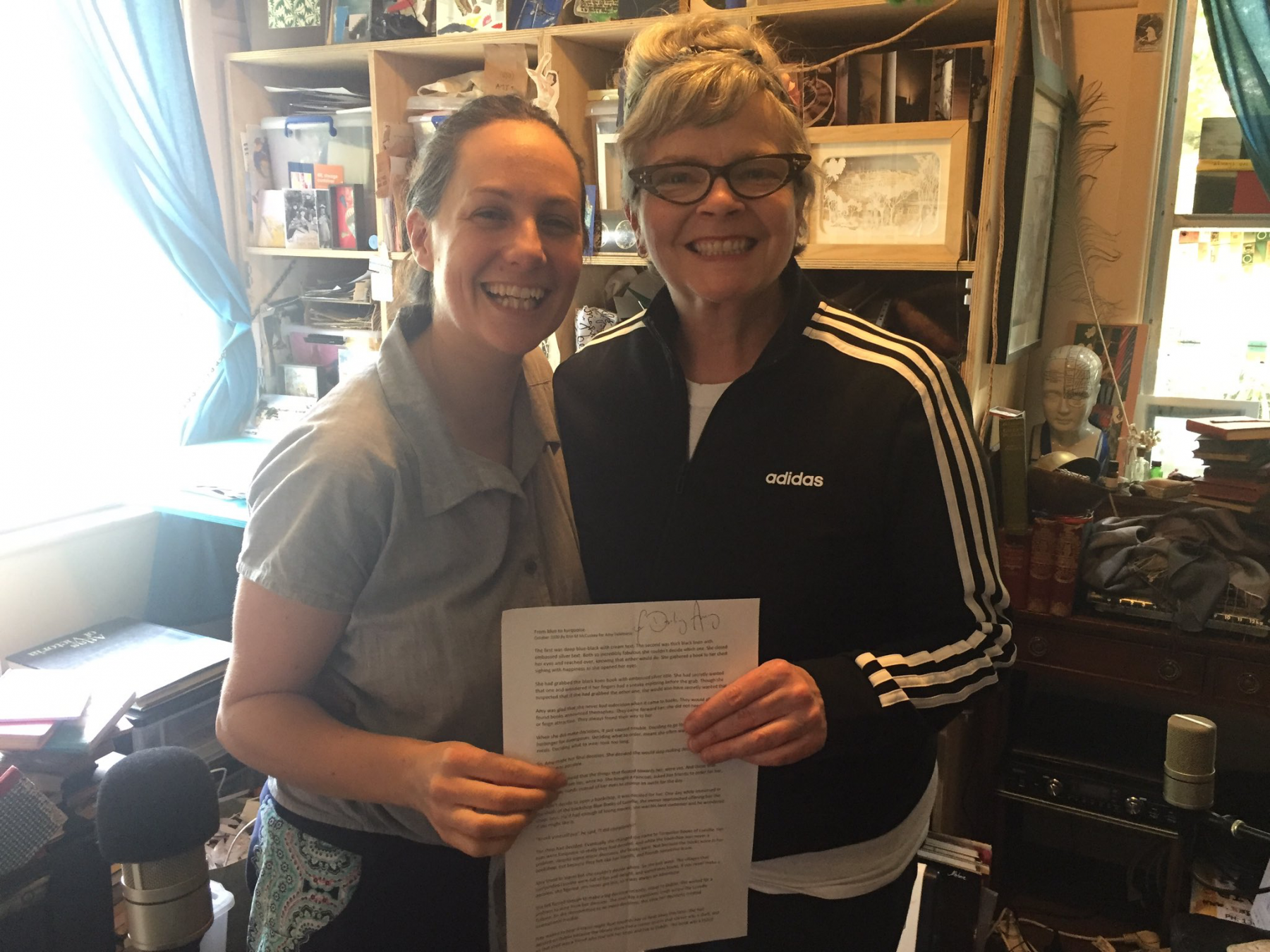
From Blue to Turquoise, for Amy.
The first was deep blue-black with cream text. The second was thick black linen with
embossed silver text. Both so incredibly fabulous she couldn’t decide which one. She closed her eyes and reached over, knowing that either would do. She gathered a book to her chest sighing with happiness as she opened her eyes.
She had grabbed the black linen book with embossed silver title. She had secretly wanted that one and wondered if her fingers had a sneaky exploring before the grab. Though she suspected that if she had grabbed the other one, she would also have secretly wanted that.
Amy was glad that she never had indecision when it came to books. They would all do. She found books announced themselves. They came forward to her; she did not need to be polite nor feign attraction. They always found their way to her.
When she did make decisions, it caused trouble. Deciding to go for a walk was a
harbinger for downpours. Deciding what to order, meant she often wanted her friend’s meals and eciding what to wear took too long.
So, Amy made her final decision. She decided she would stop making decisions. Well as much as was possible.
She decided instead that the things that floated towards her, were a yes. And those that floated away from her, were no. She bought a raincoat, asked her friends to order for her and used her hands instead of her eyes to choose an outfit for the day.
She didn’t decide to open a bookshop, it was decided for her. One day while immersed in the shelfs of the bookshop, Blue Books of Luxville, the owner approached offering her the shop keys. He’d had enough of losing money and she was his best customer and he wondered if she might like it?
“Knock yourself out” he said, “I did completely!”
The shop had decided. Eventually she changed the name to Turquoise Books of Luxville. Her eyes were turquoise so really they had decided. And while the bookshop was never a problem, despite some minor decisions, the books were.
Not because the books were in her bookshop, but because they felt like her friends, and friends sometime leave.
Amy loved to travel but she couldn’t decide where. So she just went. The villages that surrounded Luxville were full of fun and delight, and sometimes books. If you never make a decision, she figured, you never get lost, so it was always an adventure.
She felt forced though to make a big decision recently, travel to Dublin. She waited for a problem to arise from her decision. The next day a pandemic crept across the Luxville Tribune. So she recommitted to no more decisions, this time her decisions created international trouble.
Amy waited to hear if travel might float towards her or float away this time. She had
decided on Dublin because the library there had a corner and in that corner was a shelf, and on that shelf was a friend who had left her to go and live in Dublin.
The book was a faded red hardback first edition that called to her like a lonely Aunt, a sound just out of reach, like tears that sting when your heart hurts. That corner seemed very inviting and Amy wanted to see if her lonely aunt was being loved enough and how she was settling in.
At Turquoise Books when Amy wrapped her friends for sale, she added a beautiful
bookmark inside the really special ones. The bookmarks were silk, woven with short poems of love and forget-me-nots, with short coloured tassels. Amy always had a good supply because they were often sent back by the new owners, who thought them rare treasures forgotten.
Amy had secreted a bookmark with her lonely aunt, however it had not yet been returned by the Dublin librarians. Amy wondered if her beautiful book had been greeted, were her leaves stretched open, was she rested and maybe even read. That’s why Amy made her rare decision, this time to visit her lonely Aunt, to know if she was happy.
It was the biggest decision Amy had made in years. She had purchased the ticket, booked her travel and located accommodations. Amy had never left Luxville for more than a few nights, ever, and what Amy did not need was a pandemic. But that’s what happens when she makes decisions.
The travel agent had been kind. “Oh most people have cancelled” she said “but I don’t mind if you postpone or cancel, it’s all the same to me. What would you like to do?”
Amy’s renewed decision to not make decisions was sorely tested by this question. She postponed. It seemed more like a non-decision than did cancelling, which seemed so definite. Not making decisions for so long had allowed Amy to understand that fate is neither good nor bad. It simply is.
And the lonely aunt would happily wait with her embroidered bookmark inside, until Amy arrived on the day that floated towards her.
(dreamy classical piano music plays)
Erin: I think that’s what the message is. I think if we can find joy then we are capable of anything as a people.
Amy: I was thinking about Luxville and how you have the different characters, the mayor and the artist and such and I think you were going to have me as the bookseller, you know the local book shop before I even had a bookshop.
Erin: How amazing is that? You see that to me just felt like I knew you were going to do that. And your love of books. What the hell else were you going to do. You know. (laughs)
So to have actually written that into Luxville and then you know… what was it a few years later? You owned a bookshop. It was kind of inevitable anyway. I was just riding the Amy bookshop wave.
Amy narration: Thanks so much Erin for your beautiful work across film, photography, writing and for creating that tale, weaving fact and fiction, for our first Things Found in Books segment.
So now, we jump back in time to 2013 and go into the bookshop when it was Alex’s Pot of Gold, Books and Collectables. Just a note that it kind of sounds like we’re in an aquarium, but as far as I remember there were no fish in the store, make of it what you will! You will also hear the little bell that rings when the door opens, I think it’s still there.
Man’s voice with Hungarian accent (Alex Zety):
(bookshop ambience sounds in the background)
My name is Alex. I got a book shop and I sell books. I buy and sell books and I read them in between time when I got time. And I’ve been here for 12 years. (laughs)
Amy: Have you seen lots of changes in people’s reading habits?
Alex: Books are like fashion. What’s popular? Right now, it’s very interesting. I sell a lot of comics. Believe it or not. I got kid’s books, I got art, I’ve got fishing, I’ve got animals. (laughs) I have everything under the sun. Poetry. Everything.
(Looking around shop)
Amy: That’s a nice edition.
Alex: yeah.
Amy: Maybe you’ll get a French reader come in one day.
Alex: You can tell by the pictures. You can’t read it but you can open it.
Amy: Look at all the comics there.
Alex: Yeah I got plenty of comics.
Woman’s voice (a customer): You haven’t got much sheet music though.
Alex: Sheet music? I have to bring some in. I will. I promise.
Amy narration: Back then we had no idea but in 2016 Alex sold the shop to us and we transformed it into Minerva’s. And in 2020 we passed the space onto Christine to create her new business. Where Alex was showing me the Jules Verne in the back corner of the shop, Christine now has the kid’s section and a magic window.
Woman’s voice (Christine Crawshaw showing Amy around her shop): Ok we’re looking at an assortment of beautiful old books, little tiny statue things, there are three dragons hidden in there. One hippopotamus made of pewter. There are things from my childhood. There’s a beautiful old vintage measuring tape that was my great aunt’s, curling around. There’s even a snake skin in there, that’s a shredded snake skin, I wouldn’t hurt an animal.
Amy: Oh and you’ve put the emu as well.
Christine: Yes the Emu is popping up. He’s moved from the door to the corner.
Amy: Oh beautiful. I love it so much.
Woman’s voice (Christine Crawshaw): And there’s lot of feathers and little things and that will get creepier as Halloween comes closer. And then it will change to Christmas…
Amy: What do you think Julian?
Man’s voice (Julian Potter): vastly, vastly improved. (laughter all round)
Christine: vastly different.
(sound of xylophone)
Christine: So Sothis Books and Sartorial will be a little tiny wonderland of cram packed fun things to find, literally there will be things to find in the magic window out in the back corner. Great little space for kids and grown ups alike. More books. Everyone needs more books. And more shoes. (laughs)
(sound of music box in background)
Christine: I am Christine Crawshaw. I am creative. Hi. Love Ballarat. I adore Ballarat and our history. And I’m glad to be looking after part of that too.
Amy: So yeah, tell me your vision for the shop.
Woman’s voice (Christine Crawshaw): So the sartorial bit will be… ah hopefully my wardrobes will be emptying out. I have an awful lot of them. I’m not kidding. Like 13 wardrobes. I claim my children’s wardrobes. There are shoes packed in bookshelves to the ceiling in my front room. And I think it’s about time I got rid of some of that. So I got all of my stuff, to bring into the shop. And then I’m going to have these little sections in the glass display cases where people can have their wares for sale. I’ve got some jewellers and some arts and crafts people. We’re going to have some little crafty things on the walls. Paper artwork because Ballarat is the city of craft and folk art so we can really go to town with that now and hopefully we’ll sell some books and meet some great people.
Amy: Oh I can’t wait. So we’ve got one of Christine’s lovely children here as well, Patrick, who I’m sure can attest to the full house of goodies. But yeah, how is this for you, Mum getting the bookshop going?
Boy’s voice (Patrick): It’s quite amazing seeing as all of her life she didn’t really get to do much because of… well, she had kids. (laughs) To put it bluntly. She’s just really happy because she finally gets to do something that she’s always wanted to.
Amy: Did you imagine it would be a bookshop?
Patrick: Well yeah, kind of. It sort of a mixture between book shop and mum’s house.
Amy: Oh that’s such a good way to put it for everyone that knows you and your warmth and unique style. It’s like ‘come to a book shop/Christine’s house.’
(music box sounds and muffled chatter)
Amy: Had you heard of Coles Book Arcade Patrick?
Patrick: Not before now. It’s quite an interesting story.
Christine: Yeah he was such a lovely guy. You know he wanted the whole no borders and one language for the whole world. And just everything else that he had crammed in there. Music and stationery.
Amy: You’ll be making your own little Ballarat Book Arcade.
Christine: Oh I love that. Love the fernery. There are definitely some plants coming to live here, definitely. I’d love that.
Amy narration: So booksellers are carrying on their work and creativity, even starting new shops, amid this strange and challenging year. Delivering books to people’s homes by bike (and sometimes getting marmalade in return), as we had the fun of doing recently, having a driveway bookshop at our house for Love your Bookshop Day. Because it’s never just about buying or selling books, it’s about places where people can just be, they can meet, and get inspired.
(Kids chatter)
Amy: Sam just asked ‘what is Coles Book Arcade?’ It was a beautiful book shop in Melbourne.
(child making sounds)
And his icon that he had above the shop was a rainbow. You helped me do the chalk rainbows last week?
Child speaking: Yes we did.
(woman and children singing a sweet song about rainbows)
Woman’s voice (Chris Gordon): It always starts with an idea of sharing as opposed to retail, don’t you think, bookselling, in a way. It’s not a classic retail experience. You know it’s not a transaction of just money for goods, it’s actually so much more, bookselling. I guess that’s why it’s always been one of the more honourable trades.
Amy: Do you think there’s a particular type of person that becomes a bookseller?
Chris: I think they’re good people. (laughs) I think they’re really good people. I think they’re people that are compassionate. And I think they’re people that are searching for answers at all times. What about you? Do you think there is?
Amy: Ummm. We’re all a bit odd aren’t we? (laughs)
Chris: A bit kooky. We’re a bit kooky.
Amy: Yeah I guess that insatiable curiousity for life and ideas and that desire to share it with others. That’s what keeps me going.
(dreamy classical piano music plays)
Amy narration: Today, I think we as booksellers and story lovers share the same hope for sharing the love of books and connectedness that E.W. Cole spread over 100 years ago. And as we saw in Part 1, just as Cole was a master marketer and storyteller about his own shop and his messages of hope for humanity, the storytellers that have come after him have bought new life to his fantastical vision, mixing fact and fiction and as Erin McCuskey puts it, creating new, human truths and various perspectives, that maybe bring the past and present a little closer, as we dream up our future.
Woman’s voice (host Amy Tsilemanis): Yeah it’s interesting thinking about what resonates for people today still about his character. What do you think it is that’s still so enduring.
Woman’s voice (Lisa Lang): Well I think his optimism is something, well I think it’s something we could all use right now, that’s for sure. But yeah, his optimism and idealism is… I think it’s quite attractive. It sort of speaks to this sense that there is a better world out there. A better way that we can be living. That we can actually help create that. That we’re not powerless that our actions matter. So I think he always acted in a way where he believed he could make a difference. He didn’t seem to lose hope easily and he definitely saw some tough times. He saw the 1890’s depression. He lost a child. He definitely endured hardship but maintained a real sense of great excitement and possibility for the world. I guess that’s why it’s called Utopian Man. That sense of a Utopia always being just within reach. Something that we can aim for. I think there’s something endearing and attractive about that sort of vision.
Amy narration: Thanks so much for listening. This completes our first episode of Gather, with Minerva’s Books & Ideas, produced by me, Amy Tsilemanis with sound engineering and general audio mastery by the amazing Dave Byrne. And this first episode is proudly supported by The Australian Government’s Regional Arts Fund, provided through Regional Arts
Australia, administered in Victoria by Regional Arts Victoria.
Thanks to our guests and go and check out their work: Rex Hardware, Erin McCuskey, Christine Crawshaw at Sothis Books and Sartorial, and Chris Gordon at Readings in Melbourne. More info and about how you can support the show is at minervasbooks.com/gather
Music featured in this episode is by Ellen Sorensen, and we heard clips from Adam Simmons Creative Music Ensemble, and the Carlo Onzo Trio.
Keep making art, it’s what makes it all worthwhile.
Our next episode we’ll be exploring travel and the challenges of this at this time. And our indie book feature will be with Crave Books in Tasmania. Just across the way. See you then.
 Minerva's Books & Ideas